> For the complete documentation index, see [llms.txt](https://help.verkada.com/llms.txt). Markdown versions of documentation pages are available by appending `.md` to page URLs; this page is available as [Markdown](https://help.verkada.com/intercom/es/configuracion/wire-a-doorbell-chime-to-an-intercom/set-up-a-4-wire-doorbell-chime-for-verkada-intercom.md).
# Configura un timbre de puerta de 4 cables para Intercom Verkada
Aprende a configurar timbres de puerta de 12 V de 4 cables como timbres del Intercom Verkada
Los intercomunicadores Verkada incluyen un relé de salida que puedes usar para activar un timbre o campana.
{% hint style="danger" %}
Necesitas una fuente de alimentación de terceros para alimentar un intercomunicador.
{% endhint %}
{% hint style="warning" %}
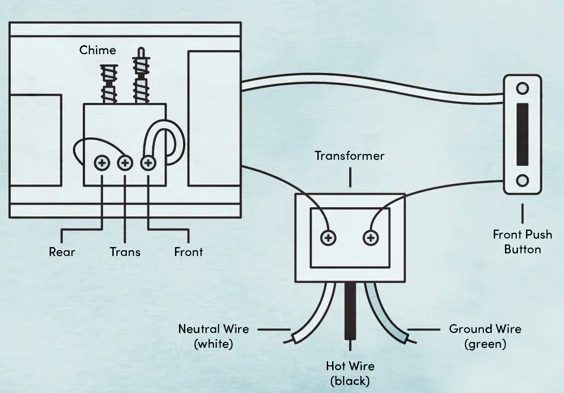
Esta guía se aplica a campanas de 4 cables. Si tienes una configuración de timbre más tradicional como la del diagrama siguiente, consulta [Cableado tradicional de timbre para intercomunicadores Verkada](/intercom/es/configuracion/wire-a-doorbell-chime-to-an-intercom.md) para obtener una guía detallada de cableado.
 {% endhint %}
***
## Configurar una salida de campana
{% stepper %}
{% step %}
**En Verkada Command, ve a Todos los productos > Intercomunicador.**
{% endstep %}
{% step %}
**Selecciona tu intercom y haz clic en Configuración.**
{% endstep %}
{% step %}
**En I/O > Output, selecciona Chime.**
{% endstep %}
{% endstepper %}
### Cablea tu intercomunicador
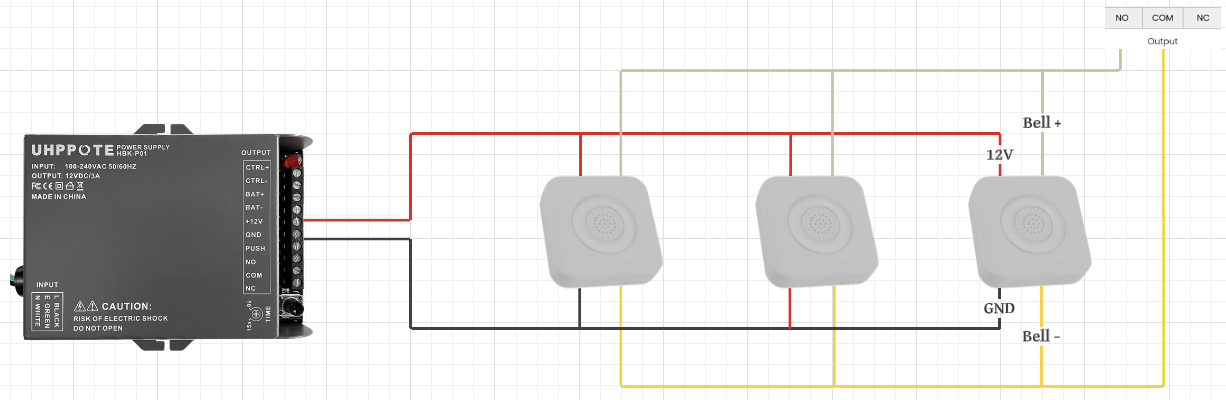
Las campanas de 4 cables tienen 2 cables dedicados a la alimentación y 2 cables dedicados a activar el sonido del timbre. Este procedimiento se aplica a un solo timbre (o a varios timbres) cableados en paralelo, como se muestra en la imagen.
{% stepper %}
{% step %}
**Retira el bloque de terminales o el cable pigtail de la parte trasera de tu intercomunicador.**
{% endstep %}
{% step %}
**Para cada timbre, conecta bell+ y bell– a las salidas NO y COM del bloque de terminales/cable pigtail del intercomunicador, respectivamente.**
{% endstep %}
{% step %}
**Para cada timbre, conecta el voltaje positivo y tierra a la salida de voltaje positivo y tierra de tu fuente de alimentación, respectivamente.**
{% endstep %}
{% step %}
**Vuelve a insertar el bloque de terminales en el intercomunicador.**
{% endstep %}
{% endstepper %}
***
{% hint style="warning" %}
Si tienes varios timbres, conéctalos en paralelo.
{% endhint %}
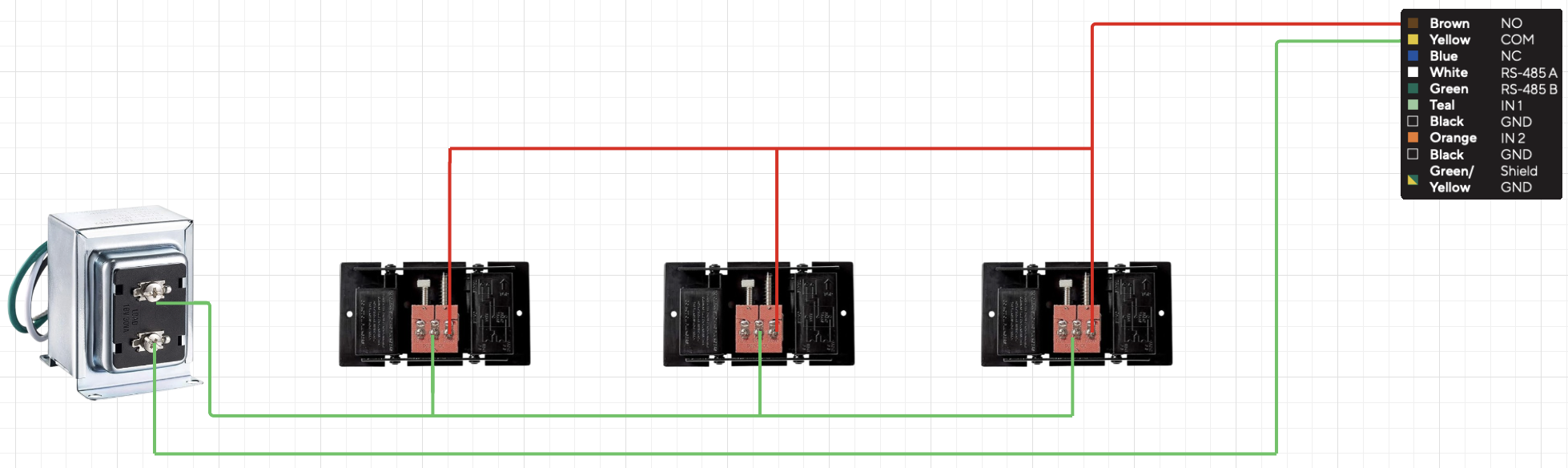
#### Cableado del pigtail TD33
#### Cableado del bloque de terminales TD52/53/63
---
# Agent Instructions
This documentation is published with GitBook. GitBook is the documentation platform designed so that both humans and AI agents can read, navigate, and reason over technical content effectively. Learn more at gitbook.com.
## Querying This Documentation
If you need additional information that is not directly available in this page, you can query the documentation by asking a question.
Perform an HTTP GET request on the following URL with the `ask` and `goal` query parameters:
```
GET https://help.verkada.com/intercom/es/configuracion/wire-a-doorbell-chime-to-an-intercom/set-up-a-4-wire-doorbell-chime-for-verkada-intercom.md?ask=&goal=
```
`ask` is the immediate question: it should be specific, self-contained, and written in natural language.
`goal` is what the user is ultimately trying to achieve, the reason they need the answer. Sharing it helps GitBook give you a better, more relevant answer. A goal is most helpful when it describes the outcome the user wants rather than restating the question. For example, with `ask=how do I create an API token`, a goal like `automate deployments from our CI pipeline` lets GitBook tailor the answer to that use case.
The response will contain a direct answer to the question and relevant excerpts and sources from the documentation.
Use this mechanism when the answer is not explicitly present in the current page, you need clarification or additional context, or you want to retrieve related documentation sections.
{% endhint %}
***
## Configurar una salida de campana
{% stepper %}
{% step %}
**En Verkada Command, ve a Todos los productos > Intercomunicador.**
{% endstep %}
{% step %}
**Selecciona tu intercom y haz clic en Configuración.**
{% endstep %}
{% step %}
**En I/O > Output, selecciona Chime.**
{% endstep %}
{% endstepper %}
### Cablea tu intercomunicador
Las campanas de 4 cables tienen 2 cables dedicados a la alimentación y 2 cables dedicados a activar el sonido del timbre. Este procedimiento se aplica a un solo timbre (o a varios timbres) cableados en paralelo, como se muestra en la imagen.
{% stepper %}
{% step %}
**Retira el bloque de terminales o el cable pigtail de la parte trasera de tu intercomunicador.**
{% endstep %}
{% step %}
**Para cada timbre, conecta bell+ y bell– a las salidas NO y COM del bloque de terminales/cable pigtail del intercomunicador, respectivamente.**
{% endstep %}
{% step %}
**Para cada timbre, conecta el voltaje positivo y tierra a la salida de voltaje positivo y tierra de tu fuente de alimentación, respectivamente.**
{% endstep %}
{% step %}
**Vuelve a insertar el bloque de terminales en el intercomunicador.**
{% endstep %}
{% endstepper %}
***
{% hint style="warning" %}
Si tienes varios timbres, conéctalos en paralelo.
{% endhint %}
#### Cableado del pigtail TD33
#### Cableado del bloque de terminales TD52/53/63
---
# Agent Instructions
This documentation is published with GitBook. GitBook is the documentation platform designed so that both humans and AI agents can read, navigate, and reason over technical content effectively. Learn more at gitbook.com.
## Querying This Documentation
If you need additional information that is not directly available in this page, you can query the documentation by asking a question.
Perform an HTTP GET request on the following URL with the `ask` and `goal` query parameters:
```
GET https://help.verkada.com/intercom/es/configuracion/wire-a-doorbell-chime-to-an-intercom/set-up-a-4-wire-doorbell-chime-for-verkada-intercom.md?ask=&goal=
```
`ask` is the immediate question: it should be specific, self-contained, and written in natural language.
`goal` is what the user is ultimately trying to achieve, the reason they need the answer. Sharing it helps GitBook give you a better, more relevant answer. A goal is most helpful when it describes the outcome the user wants rather than restating the question. For example, with `ask=how do I create an API token`, a goal like `automate deployments from our CI pipeline` lets GitBook tailor the answer to that use case.
The response will contain a direct answer to the question and relevant excerpts and sources from the documentation.
Use this mechanism when the answer is not explicitly present in the current page, you need clarification or additional context, or you want to retrieve related documentation sections.